Walk-In vs Frameless Showers: Pros, Cons & What Suits Your Space
It’s one of the most common questions at the design stage of a bathroom renovation: walk-in or frameless? The two options are often discussed as though they’re interchangeable, but they’re meaningfully different in both function and design. Understanding the distinction and what each requires from your space makes it easier to make the right decision before any work starts.
What’s Actually the Difference?
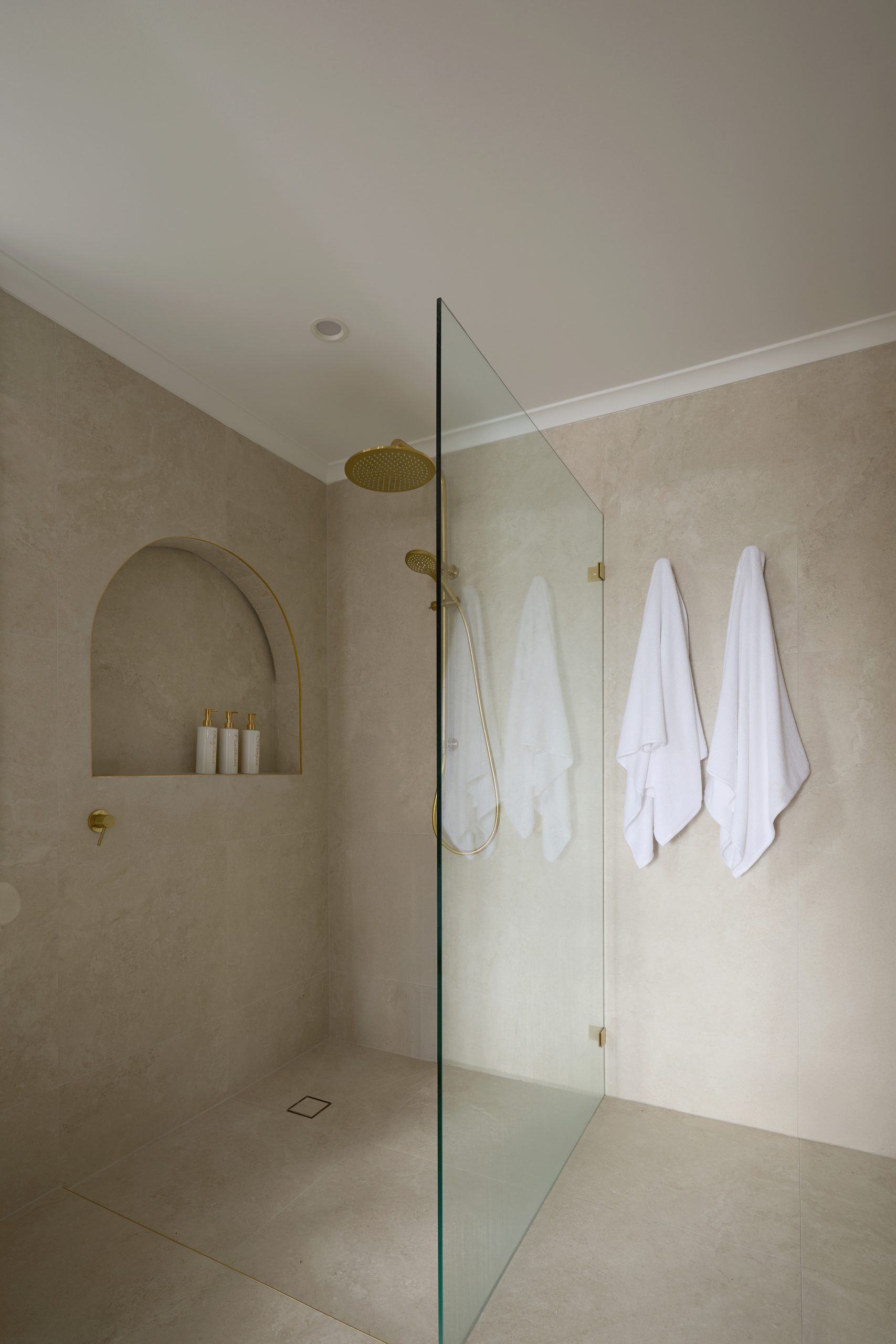
A frameless shower refers to the glazing configuration. A frameless shower screen or enclosure uses thick, toughened glass panels with minimal or no metal framing around the edges, held in place by discreet hinges and fixings. The result is a clean, transparent screen that doesn’t interrupt the visual flow of the tiled surfaces behind it.
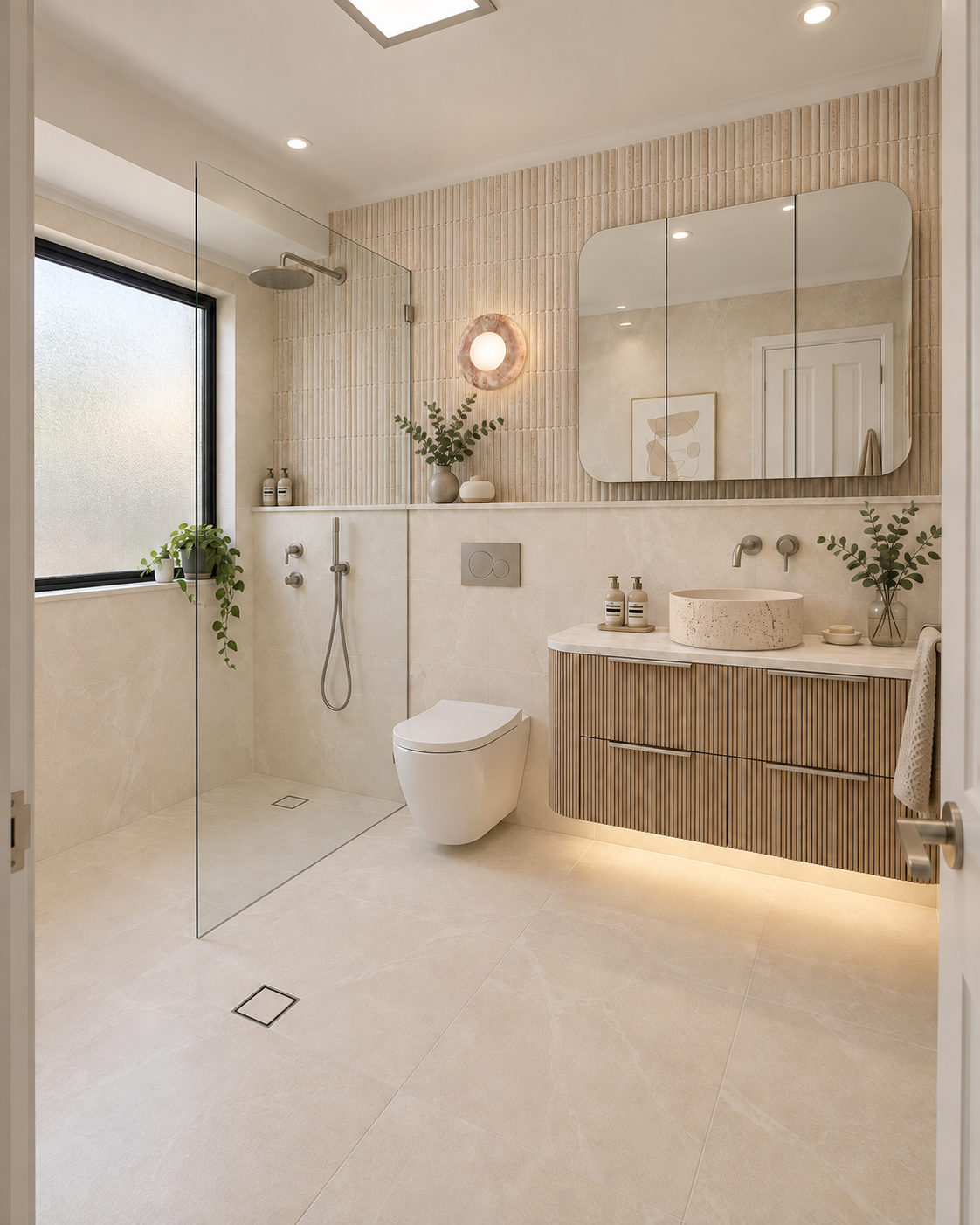
A walk-in shower refers to the layout configuration. A walk-in shower has no door or a very minimal screen and relies on the geometry of the space, typically an L-shaped or recessed layout, to contain water. Most walk-in showers utilise frameless glazing, but not all frameless shower screens are walk-in configurations. The distinction matters when you’re planning a layout.
The Case for a Frameless Shower Screen
Frameless shower screens are suitable for a wide range of bathroom sizes and layouts. They provide a clear visual boundary between the wet area and the rest of the bathroom without the visual weight of frames, and they’re effective at containing water in spaces where a fully open walk-in isn’t practical.
They’re also easier to retrofit into existing bathroom layouts than walk-in configurations, which often require more deliberate planning of the room’s geometry. For a standard bathroom where you’re renovating within the existing footprint, a frameless screen is usually the more straightforward path to a high-end result.
Maintenance is relatively simple. The glass itself is easy to clean, particularly with a quality glass coating applied at installation. Hinges and fixings occasionally need attention over time, but there’s no frame to trap mould or silicone to replace as frequently as in framed alternatives.
The Case for a Walk-In Configuration
A walk-in shower, when the space allows for it, creates an open, generous feel that a screened enclosure can’t fully replicate. The absence of a door changes how the bathroom functions day to day. There’s nothing to clean, nothing to open, and the visual connection between the shower and the broader bathroom space is uninterrupted.
The catch is water containment. A walk-in shower requires sufficient depth, typically a minimum of 900mm from the entry point to the shower head wall, ideally more, to prevent water spray from reaching outside the wet area during normal use. The showerhead position and type also matter. An overhead rain shower is generally better suited to a walk-in configuration than a wall-mounted head angled toward the opening.
Linear drains running along the back or side wall are strongly recommended for walk-in showers. They manage water runoff efficiently, work well with large-format tiles, and remove the visual interruption of a centre drain.
What Suits Smaller Bathrooms
In compact Sydney bathrooms, the walk-in configuration is often not practical without compromising floor space elsewhere in the room. A frameless pivot or sliding door screen generally makes better use of limited dimensions. It defines the wet area clearly without requiring the additional depth that an open walk-in needs to function properly.
A frameless sliding door, in particular, is worth considering where space is tight. It doesn’t require clearance for door swing, it reads as clean and minimal, and it performs well in narrow shower recesses.
Making the Decision
The right choice comes down to three things: the size and shape of your bathroom, your daily habits, and your design priorities. If you value simplicity and have the space for it, a walk-in configuration is hard to beat. If your bathroom is more compact or you prefer a clear boundary between the wet area and the rest of the room, a frameless screen delivers a strong result without the spatial requirements.
At Crystal Bathrooms, we work through this decision as part of the initial design consultation. Our 3D design process shows you both options in your actual space so you can make the call based on how each layout will actually look and function, not just how it reads in the abstract.
Frequently Asked Questions
How much space do you need for a walk-in shower?
A functional walk-in shower typically needs a minimum depth of 900mm from the entry to the back wall, and ideally 1000mm or more. The wider the opening, the more important adequate depth becomes for water containment.
Are frameless shower screens more expensive than framed?
Generally yes. Frameless screens use thicker toughened glass and more precise hardware, which carries a higher cost than framed or semi-frameless alternatives. The price difference is noticeable, but for most renovation budgets, it’s a worthwhile investment given the visual and practical benefits.
Do walk-in showers cause water on the bathroom floor?
They can, if the configuration isn’t well-designed. Adequate depth, correct showerhead positioning, and effective drainage design all play a role in containing water. A well-planned walk-in shower with an appropriate drain manages water effectively in normal use.
What glass thickness is recommended for a frameless shower screen?
10mm or 12mm toughened safety glass is standard for frameless shower screens. Thicker glass feels more substantial and is less prone to flex at the hinges over time. Anything thinner than 8mm is generally not recommended for a frameless configuration.
Can I convert an existing shower to a walk-in during a renovation?
Yes, in most cases, but it depends on whether your bathroom layout provides enough depth once the existing screen and any partition walls are removed. A Crystal Bathrooms site inspection will confirm whether the conversion is straightforward or whether adjustments to the layout are needed.
Crystal Bathrooms
Crystal Bathrooms is a Sydney-based bathroom renovation company with 30+ years of combined experience, servicing homeowners and commercial clients across Greater Sydney. We manage every stage of your renovation, from initial consultation and 3D design through to construction and completion. All work is fully licensed, insured, and backed by a waterproofing warranty. Request a free quote or book a consultation with our team today.